What Does Red Light Therapy Do for Your Face?
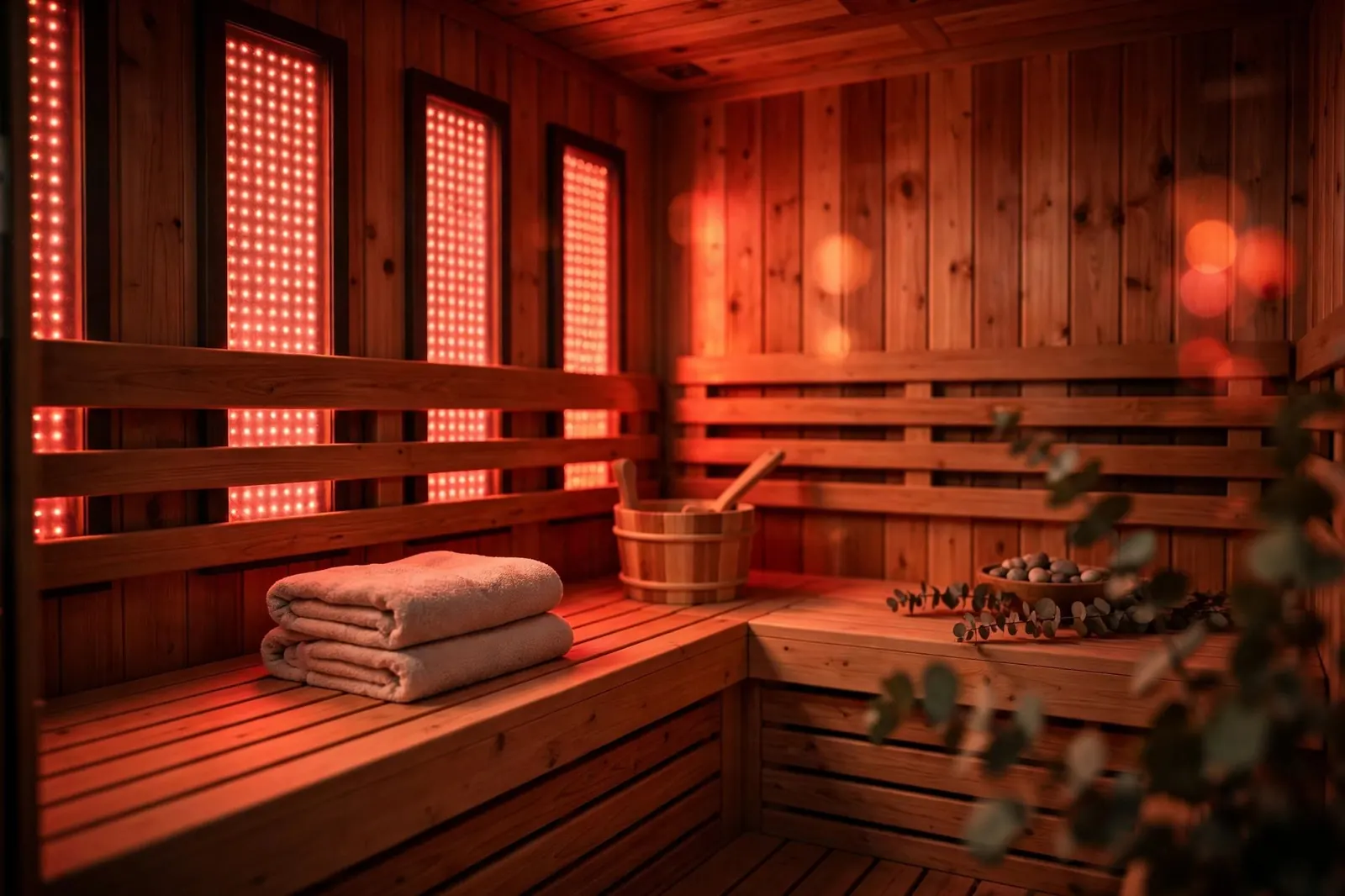
If you've been wondering what red light therapy does for your face, you're asking one of the most-searched questions in home wellness right now. In plain terms: red light therapy bathes your skin in low levels of red and near-infrared light. People use it hoping for firmer-looking skin, softer-looking fine lines, and a calmer, more even tone — no creams, no needles, no downtime. This guide explains what it is, how it's used on facial skin, and what a sensible at-home routine looks like.
What Is Red Light Therapy?
Red light therapy (sometimes called photobiomodulation) uses LED panels that emit specific wavelengths of red and near-infrared light. It was first explored in clinical and sports-recovery settings, and in recent years it has moved into spas, dermatology offices, and home devices. Important distinction: this is light, not heat. It feels barely warm — completely different from the deep heat of an infrared sauna, though the two are often used together.
How Red Light Therapy Works on Facial Skin
The basic idea is simple: when red wavelengths reach your skin, they are absorbed by skin cells. Supporters of the treatment say this gentle stimulation helps skin look and feel its best — which is why it's marketed for cosmetic and wellness use rather than as a medical treatment. Collagen gets mentioned a lot here: it's the protein that helps skin look firm and smooth, and red light therapy is popular with people who want to support the appearance of firmer, more resilient-looking skin. Keep expectations honest, though — this is a gradual cosmetic routine, not an overnight transformation.
What People Use It For
- Fine lines and wrinkles — the most common reason people try it; users report lines looking softer over time
- Firmness and elasticity — people aiming for a firmer-looking jawline and cheeks
- Redness and uneven tone — many users say their complexion looks calmer and more even
- Overall glow — the "lit from within" look people describe after consistent sessions
Notice the pattern: everything here is about appearance. Red light therapy is a cosmetic wellness practice. If you have a diagnosed skin condition, talk to a dermatologist first — light therapy doesn't replace medical care.
How to Use Red Light Therapy on Your Face: A Simple Routine
- Session length: most at-home routines run 10–20 minutes per session
- Distance: follow your device's guidance — typically around 6–12 inches from the panels
- Frequency: 3–5 sessions per week is the common starting point
- Consistency beats intensity: regular short sessions outperform occasional long ones
- Start with clean skin: no makeup or heavy creams blocking the light
- Protect your eyes: don't stare directly into the LEDs — use the goggles most devices include
Adding Red Light to Your Sauna Sessions
Here's where it gets convenient: many home infrared saunas offer red light panels as a built-in option, so you get heat and light in a single 20-minute session. Instead of standing in front of a panel, you simply sit back while the panels do their work. Our red light panel accessory ($499) adds full red light coverage to any Aura sauna — a popular upgrade for buyers focused on skin and recovery. Pair it with the Aura Duo 2-person infrared sauna and your daily session covers both bases at once.
Red Light Therapy for Face — FAQ
How long does red light therapy take to work on your face?
Most people report noticing changes only after several weeks of consistent use — typically 4–8 weeks of regular sessions. Skin responds gradually, so patience and a steady routine matter more than any single session.
Is red light therapy safe for your face?
It is generally considered a gentle, non-invasive cosmetic practice — the light produces no UV and barely any heat. Still, don't look directly into the panels, use eye protection, and check with a dermatologist if you have a skin condition or take light-sensitizing medication.
Can I use red light therapy on my face every day?
Many people do short daily sessions, but the most common guidance is 3–5 times per week. There is no evidence that more is better — follow your device's recommended schedule and give your skin rest days.
What is the difference between red light therapy and infrared sauna heat?
Red light therapy delivers light wavelengths aimed at the skin's surface; an infrared sauna delivers heat that warms your whole body. They work differently and complement each other — which is why combination setups are popular in home wellness.
Do I need eye protection during red light therapy for my face?
Yes. The LEDs are bright, and you should never stare directly into them. Most quality panels include goggles — wear them every session, even though the light feels gentle.
Add Red Light to Your Sauna
The Aura Red Light Panel ($499) brings full-coverage red light therapy to any Aura sauna — skin, recovery, and relaxation in one daily session.
Shop the Red Light Panel