Cold Plunge Running Costs: Honest Electricity Math
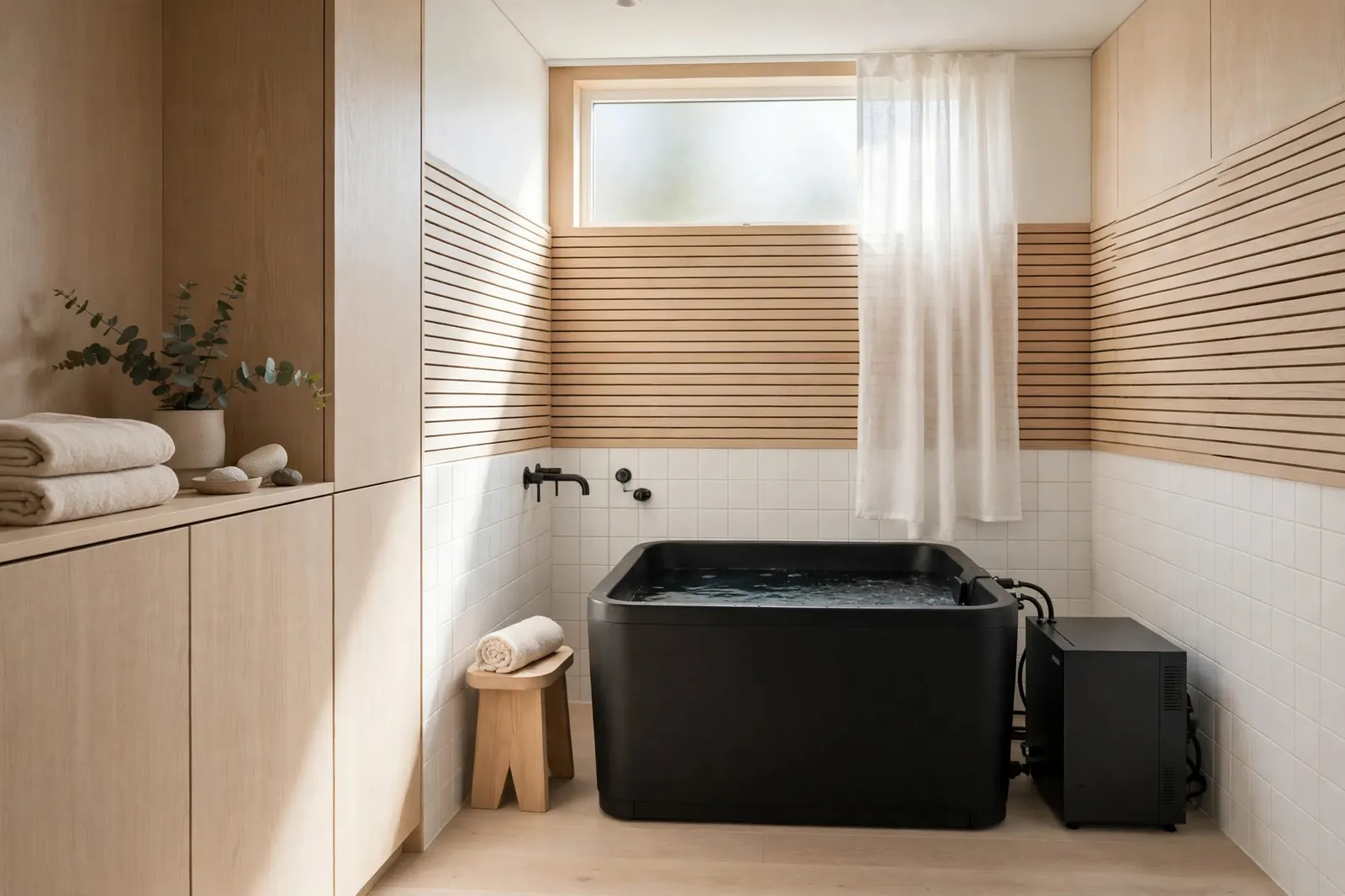
Nobody in the cold plunge industry wants to talk about cold plunge running costs. Brands publish glossy photos of steam rising off ice water, but ask “what does this actually cost to run?” and you get silence. Here is the honest math — every figure below is an estimate, because your electricity rate and climate vary.
The Chiller Electricity Math
A typical home plunge chiller draws about 0.5–1 kW when actively cooling. Once the tub reaches its set temperature, the compressor cycles on and off to hold it there, so your real cost depends on how hard the chiller has to work — which depends on ambient temperature, insulation, and your set point.
At the US average rate of roughly $0.17/kWh, a reasonable estimate for holding a well-insulated plunge at 45–50°F is about $0.50–$1.50 per day — roughly $15–$45 per month. That is an estimate, not a promise: a plunge sitting in a hot garage in August will cost more than one in a cool basement in October. Check your own utility bill for your actual $/kWh before doing your personal math.
What Moves the Number
- Ambient temperature & placement: outdoor plunges and hot garages force the compressor to cycle far more often than a climate-controlled room.
- Set temperature: holding 39°F costs noticeably more than holding 55°F — every degree colder is more compressor work.
- The cover: the insulated cover is not optional decor. A plunge left uncovered in a warm room can easily double its daily energy use.
- Heating mode: heating water to 104°F draws more sustained power than holding it cold — think of it like a small space heater cycling.
- Your electricity rate: US residential rates vary widely, from roughly half to roughly double the national average depending on your state and plan.
Water Changes
With ozone + dual filtration, a typical home plunge needs a full water change every 1–3 months. The water itself is cheap — a typical 85-gallon fill costs on the order of a dollar or two at average municipal rates (estimate). The real cost is your time: drain, wipe down, refill — about 30 minutes, a few times a year.
Filters and Upkeep
Plan on swapping the filter every 2–3 months with regular use. Typical replacement filters for this class run roughly $20–$40 each (estimate), and a mineral stick or water stabilizer every few months adds a few dollars more. Budget on the order of $100–$200 per year for consumables — an estimate, and far less than the chemical routine of a hot tub.
The Honest Takeaway
All in, a realistic estimate for cold plunge running costs is roughly $20–$60 per month for a well-insulated unit kept at a moderate set point — less than one spa day, for unlimited daily plunges at home. If operating cost is what is holding back your decision, it should not be: focus instead on warranty length, delivery terms, and whether the tub heats as well as it chills. Compare our models on the cold plunge tub collection.
Cold Plunge Cost FAQs
How much electricity does a cold plunge use?
A typical home chiller draws about 0.5–1 kW when actively cooling. Holding temperature in a well-insulated tub costs an estimated $0.50–$1.50 per day at average US rates — your rate and climate vary.
How often should you change the water in a cold plunge?
Every 1–3 months with ozone + dual filtration and the cover kept on. Without sanitation, some owners change water weekly — one more reason filtration matters.
Can I leave my cold plunge running all the time?
Yes — that is how most owners use them. Set your temperature and let the chiller cycle to hold it; the insulated cover does most of the work between sessions.
Does a cold plunge cost more to run in summer?
Yes. Higher ambient temperatures mean more compressor cycles to hold your set point — shade, indoor placement, and always using the cover keep summer costs down.
Is heating a plunge more expensive than cooling it?
Typically, yes — holding water at 104°F against a cool room draws more sustained power than holding it at 50°F. Budget a bit extra in months you use heat mode heavily.